Slots Games Gave Live Casino Its Bonus Rounds
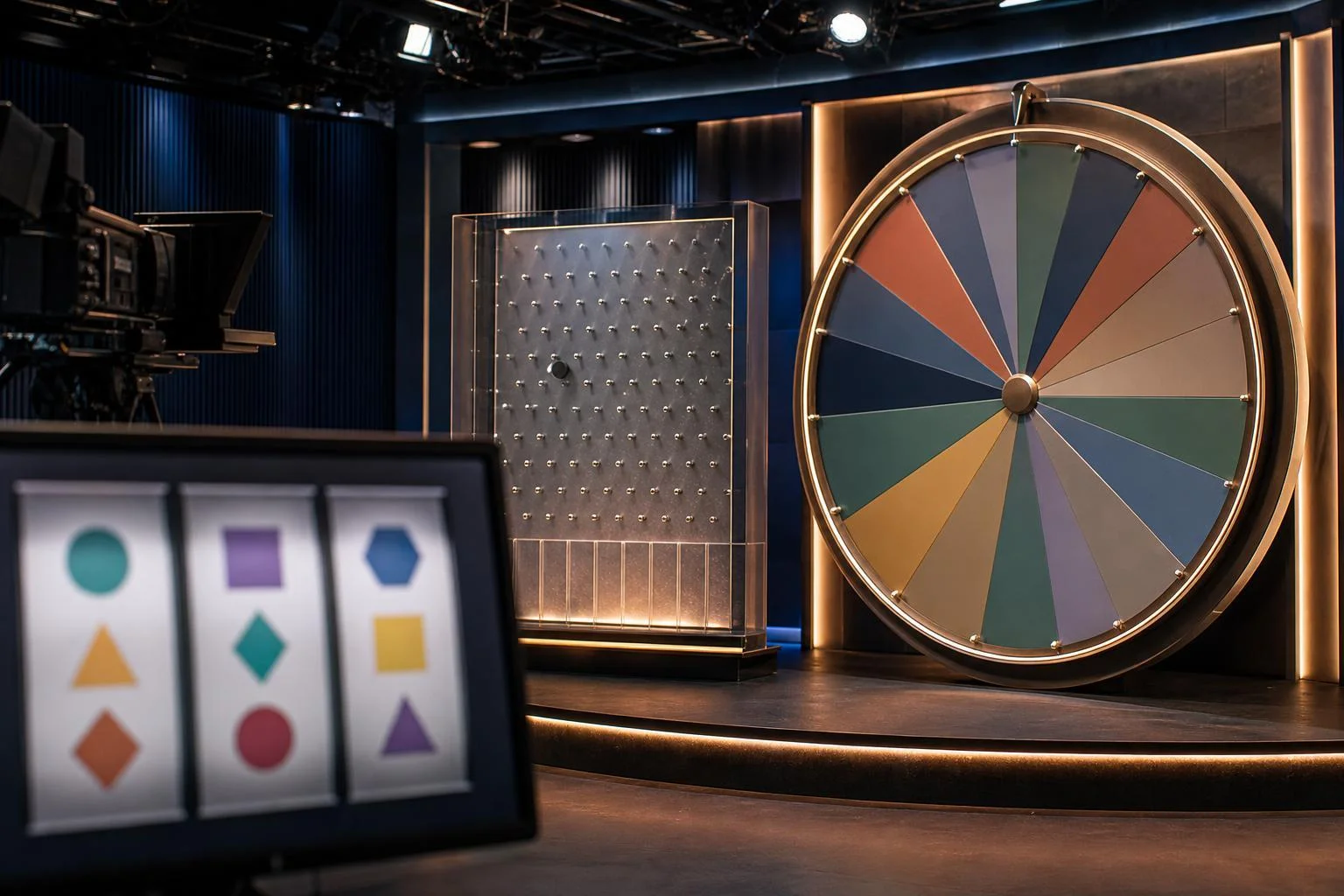
The wheel stops on a bonus segment. A presenter turns toward another part of the studio, and the action shifts to a pegboard, a shooting gallery or an animated world. Slot players will recognize the sequence: the main game has opened the door to a separate feature.
That connection became especially clear in Ontario in May 2023, when Pragmatic Play’s Sweet Bonanza CandyLand, a live version of its candy-themed slot, arrived with a 10-free-spin bonus. Its appearance among live casino ontario games followed years of developers borrowing from slots to build something beyond the familiar card table.
Slots Gave the Bonus Its Own Screen
The idea was established in video slots long before live presenters became involved. A 2001 company filing describes a machine introduced in 1997 that let players move from the main game into a secondary bonus game, with extra payout opportunities and interactive choices.
A qualifying result changed what happened next. Players might choose between options as the screen moved away from the reels, giving the bonus its own pace and appearance.
The filing also explained the business purpose: secondary bonuses helped attract players and encourage repeat play. Manufacturers were using them to shape both the experience and the appeal of their machines.
The Live Wheel Sought a Different Audience
Live developers had a related commercial goal. When Evolution’s Dream Catcher, a presenter-led money wheel, appeared in February 2017, its developer explained that it wanted to reach slot, bingo and other players who preferred alternatives to table games.
The studio supplied the spectacle. Cameras followed a large vertical wheel from several angles, with synchronized lighting and sound marking the action. Special segments applied multipliers of two or seven.
A wheel was straightforward to follow, and the multipliers offered something familiar to slot players. The presenter could explain the result while cameras showed it unfolding. From there, developers had room to expand. A special wheel segment could trigger an entirely different game.
A Wheel Result Became a Trip Around a Board
Evolution’s Monopoly Live, released in 2019, put that possibility on screen through a property-trading board game. Alongside numbered sections, its wheel included segments awarding two or four dice rolls.
Those results started an animated bonus in which a virtual character moved around a three-dimensional board, collecting prizes and multipliers. The physical wheel supplied the trigger; the digital board supplied the next part of the round.
Augmented reality, which adds computer-generated elements to a live presentation, connected the studio and the animated setting. The host remained part of the experience as the action moved elsewhere. The resemblance to a slot bonus was easy to follow: a qualifying result opened a separate scene governed by its own rules.
Four Bonuses Changed the Shape of a Round
By July 2020, Evolution’s Crazy Time had built its money-wheel game around four bonuses. A two-reel slot display operated alongside the main wheel, assigning multipliers to selected betting positions.
The bonuses differed substantially. A shooting-gallery screen let participants choose targets. A puck dropped through a pegboard, a coin flip selected a winning side, and another feature took players into a virtual wheel setting.
One main round could now lead to several kinds of action. Its developer explicitly identified slot players as an intended audience. The broadcast brought viewers together, while the wagers determined eligibility. People could watch a bonus unfold, with participation and payouts tied to the corresponding bets.
Behind the presentation, physical equipment and software had to work together. In the US, Michigan’s live-game framework requires independent testing of equipment integration with gaming platforms, alongside maintenance, access controls and security procedures.
The Slot and the Studio Joined Up
Some developers brought slots into the studio more directly. A hosted format introduced in December 2019 combined shared slot spins, presenter commentary and free-spin bonuses.
Then, in November 2021, the candy-themed adaptation carried its parent slot’s mechanics onto a large screen. Its 10-free-spin feature later reached Ontario, completing a clear journey from an individual slot game to a hosted live presentation. In the province, AGCO-registered operators such as ToonieBet, run by Canadix Limited, carry live titles from studios including Evolution and Pragmatic Play.
Another hybrid worked in the opposite direction. Players collected qualifying slot symbols, built multipliers during a timed slot phase and then entered a live coin-flip bonus led by a studio host. These connected stages make the full cost of participation worth following. Gambling carries financial risk and is restricted to adults of the applicable legal age. Time and spending limits should cover qualifying spins as well as bonus rounds.
What began as a separate feature on a slot screen had acquired presenters, physical props and a shared broadcast. The bonus round remained recognizable, even as the stage around it grew.