The world beyond the spinning reels
Losing Track of Time
Some slot players say they are hypnotised by the machines. They sit down intending to play for a little while and discover that considerably more time has passed. The experience feels like a trance, brought on by the attractive power of the slots.
There is something recognisable in that description. Prolonged, focused attention can make the surrounding world seem less noticeable. But calling the experience hypnosis does not, by itself, explain what is happening.
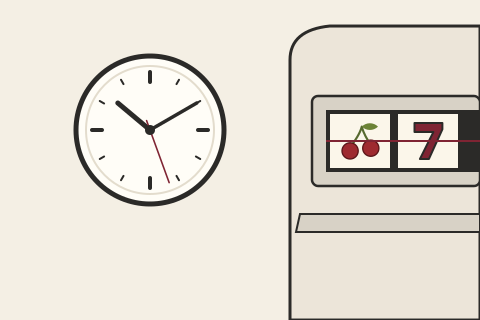
The machine is not a hypnotist with a mysterious power over its audience. The player’s own capacity for absorption is part of the story.
The Capacity to Become Absorbed
During my psychiatric residency at Columbia University, I had the privilege of training in hypnosis with Herbert Spiegel, a leading authority on its clinical use.
He taught that hypnosis was not a power residing in the hypnotist. It depended on the subject’s capacity to respond, with the hypnotist helping that person work towards a particular objective.
People differ in that capacity. Some find it difficult to become absorbed in suggested experiences. Others can concentrate so intensely that competing sights, sounds and thoughts seem to fall into the background.
That difference is worth remembering when people describe their time at a slot machine. The same room, the same reels and the same sounds need not produce the same experience in everyone.
Nor does becoming deeply absorbed mean that a person is weak-minded or unusually gullible. Attention and suggestibility are more complicated than that.
The Eyes and the Experience of Attention
Spiegel’s work included an eye-roll observation as part of his approach to assessing hypnotic responsiveness. It involved looking upwards while slowly closing the eyelids.
The observation belongs to a particular clinical assessment tradition. Eye position alone does not establish that someone is hypnotised, and it cannot tell us whether a slot player has entered a trance.
What interests me here is the movement itself. Playing the slots often means moving the eyes up and down: up to catch the falling symbols, at first moving too quickly to distinguish, and then down towards the payline to see whether anything has lined up.
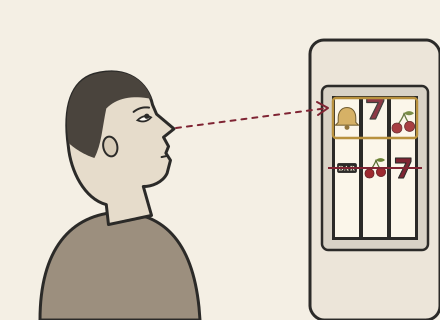
Towards the upper reel window
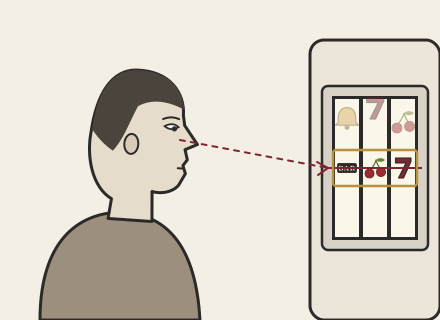
Towards the centre payline
The eyes follow a familiar journey. Something appears above, descends and comes to rest where its meaning can finally be read.
Looking Up and Looking Down
Eye movements appear in very different settings. They occur during REM sleep and are also used within EMDR, a structured psychological treatment. Neither connection makes watching slot reels a treatment or establishes that it produces the same state.
There is, however, a more ordinary way in which the direction of our gaze matters.
As small children, we look up at our parents and other authority figures. Later, looking down may express respect, embarrassment, affection or deference, depending on the person and the setting.
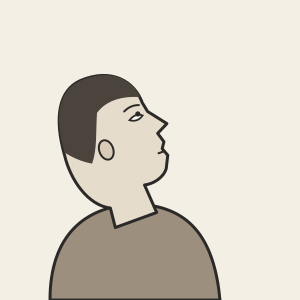
Upward gaze

Lowered gaze
We speak of looking up to someone. We lower our eyes. Our language gives these small movements a significance far beyond the muscles that perform them.
Not just fear and deference, but love and worship can lower our eyes. And when we imagine the heavens, we usually look upwards.
The Heavens and the Horizon
We look up to the heavens where earlier civilisations placed their gods. That direction carries a long history of distance, authority and wonder.
In The Once and Future Star, George Michanowsky proposed a connection between a celestial event associated with Vela and ancient Mesopotamian religious ideas. His account linked the event with the god Ea and the image of a divine presence near the waters of the horizon.
This is a speculative historical interpretation, rather than an established account of the origins of civilisation. My particular interest is in the distinction it suggests between looking up into the heavens and looking straight ahead towards the horizon.

One places the divine far above us. The other brings a spiritual presence towards eye level, close enough to seem part of our own world.
That difference offers an imaginative way of looking at the reels. Their symbols descend from somewhere above and settle on the “horizon” of the payline. There, they acquire a meaning for the person watching.
They may become the hoped-for combination that appears to grant a wish.
Or, more often, not.
A Shower of Symbols
Traditional machines use turning reels, or images that imitate them. Other games make the descent more conspicuous.
WMS Gaming’s All That Glitters, for example, used cascading gemstones. A winning formation disappeared, allowing more gems to fall into the spaces and potentially form another winning combination.
-
 1Combination
-
 2Spaces open
-
 3Symbols descend
The effect suggests an ever-bountiful source above the screen. More stones wait somewhere out of sight, ready to descend.
To my eye, the image recalls the gold in paintings by Gustav Klimt, particularly Danaë. The comparison is visual and imaginative: a shower from above, received below.
The screen gives chance a direction. We watch it arrive.
Visitors from Above
The association between the sky and superior beings has also found a place in writing about extraterrestrial life.
Historians of science such as George Basalla and Steven J. Dick have examined the relationship between ideas about other worlds and older religious expectations. Michael Shermer has likewise considered how sufficiently advanced extraterrestrial beings might appear godlike to human observers.
In Abducted, Susan A. Clancy discusses alien-abduction beliefs and the meaning people find in them. The phrase “technological angels” captures something of the resemblance: visitors imagined as possessing powers beyond our own.
Such comparisons concern human beliefs. They do not establish the existence of the beings being imagined.

My point is simpler. Again and again, we picture extraordinary power arriving from above. On a slot display, symbols make that same downward journey, bringing the possibility of a reward into view.
This is not an explanation of the machine’s mathematics. It is one way of describing the private meaning a player may find in watching the reels.