Slots as Reward Conditioners
The Symbols on the Reels
The symbols on the reels may not be much help in explaining the attraction. They can be almost anything, although sevens, diamonds and playing-card symbols are common. Fruit imagery has a long association with slot machines, and cherries still persist.
More exotic choices have included cigars, hot peppers, cartoon characters and Chinese characters. Then there are the licensed themes: television programmes such as Jeopardy! and Wheel of Fortune, personalities such as Dick Clark and Elvis, and characters such as Dana Carvey’s Church Lady from Saturday Night Live.
Other images are quite ordinary, including Spam, the canned meat, and S&H Green Stamps. Bally’s Golden Times takes a self-referential turn, using classic slot machines as its symbols.
The pictures change, but the player’s anticipation remains.

The Pleasure of Winning in Fantasy
Nor does the denomination of the machine necessarily determine the intensity of that anticipation. It might be a quarter or a dollar, or multiples of pennies and nickels that add up to considerably more with each pull of the handle or push of the Spin button.
Even practice play on a casino simulation can produce a similar feeling, based on the pleasure of winning in fantasy.
This is not to say that the monetary reward is unimportant. But a player may continue with an attractive penny machine that offers a poorer return than another game, simply because the experience itself holds their attention. The sounds, the pictures and the rhythm of play become part of what they have come for.
The Reward Schedule
In one sense, the reward is everything. The slot machine offers a familiar comparison with what behaviourists call variable reinforcement.
B. F. Skinner, the experimental psychologist, studied animals in chambers where an action such as pressing a lever could produce a pellet of food. By changing the reward schedule, he could change the animal’s behaviour.
When every response produces a reward, the relationship is straightforward. When rewards follow an unpredictable number of responses, the animal cannot know which attempt will bring the next pellet. Such schedules can encourage persistent responding.
 Response
 Reward
 after every response

Reward after an unpredictable number of responses

The slot player faces a similar uncertainty. Another press, another spin, another opportunity for a reward. There is no visible timetable to consult and no reliable pattern to discover in the previous results.
Yet the search for a pattern continues. We humans tend to develop superstitions about what makes rewards arrive. Randomness can feel like a mystery that the mind must somehow grasp and master.
Skinner’s Pigeons and the Making of Superstition
There is also the question of rewards that arrive without any connection to the action performed.
In one of Skinner’s experiments, pigeons received food automatically at timed intervals, regardless of what they were doing. Six of the eight birds developed repeated movements that he described as superstitious, including turning and moving their heads.
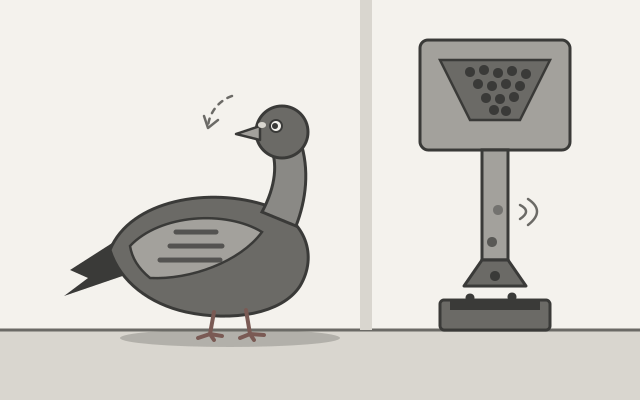
Skinner interpreted these movements as accidental associations. Food had arrived while a bird was doing something, and the bird went on repeating the action as though it had helped bring about the reward.
The slot player may also pull the handle in a particular way, wear a lucky charm or favour an article of clothing. A win that happens to follow a ritual can make the ritual feel effective.
The association is personal and persuasive, even when the action has no influence on the randomly determined result.
Coins, Tickets and the Clatter of a Payout
Slot rewards are coins, tokens or credits, not pellets of food. But the reward need not arrive in a handful of metal.
Ticket-based machines issue a printed voucher when the cash-out button is pressed. The ticket records the remaining redeemable balance, including any unspent money and winnings.
Its arrival may still be accompanied by simulated coin-like clattering, a whistle or a burst of music. The coins have disappeared, but their familiar announcement remains.
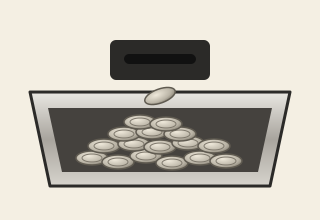
Coins in a payout tray
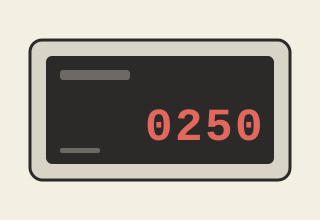
Credit display
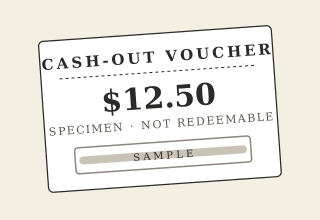
Printed cash-out ticket
For the casino, tickets reduce the work of handling coins and refilling empty hoppers. They also shorten interruptions while players wait for an attendant.
Other rewards surround the payment itself: lights behind the reels, musical flourishes and the satisfaction of seeing the symbols line up in a row. The machine has several ways of announcing that something has happened.
Players’ Clubs and Recirculated Winnings
For regular players, other tangible rewards may be available through a casino rewards card, often called a players’ club card.
Eligible play is recorded under the programme’s rules. The distinction that matters here is between money put into a machine and money played through it. A single deposit can support a much larger total of wagers when smaller returns are repeatedly played again.
The original account gives a historical Foxwoods example of $1 in complimentary credit for every $80 played. At that rate, $20 in credit represented $1,600 in wagers, much of which could have consisted of earlier returns put back into play. That example describes the rate reported at the time, rather than a current offer.
For such a calculation, it is the money played that counts, not simply the amount inserted or whether the player finishes ahead.
A considerable amount can circulate through a machine in this way. Credits are wagered, some are returned, and those returns are wagered again.
Depending on the programme, points may help pay for meals or reduce a hotel bill. Complimentary rooms offer another reason to return, particularly for customers whose play makes them valuable to the casino.
The Belief That the Next Spin Can Be Influenced
These rewards and sensory accompaniments do not quite get to the heart of the matter.
A conventional random slot game produces results that the player cannot reliably predict from previous spins. Yet uncertainty invites interpretation. People invent preferred ways of pulling the handle, pressing the button or choosing a machine.
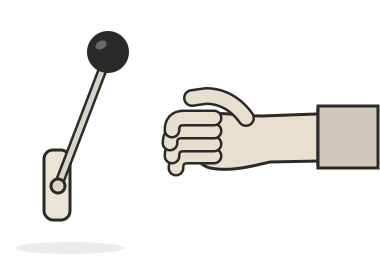
Skinner’s account describes how behaviour can become attached to a reward. It leaves a further question about what that connection feels like to the person making it.
Unlike the pigeon turning in its chamber, we can build a story around what happened. We can remember a lucky evening, attach meaning to a particular seat or decide that a familiar ritual deserves another try.
And because we can imagine an explanation, we can indulge in magical thinking about our influence over the next pull.